
Most people can’t immediately explain why one upholstered piece looks better than another. They just know it does. Something about the way the fabric sits, the way the corners behave, the way the whole surface reads as intentional rather than incidental. The difference isn’t always obvious from across the room. Up close, though, it’s everywhere.
Average upholstery functions. Exceptional upholstery holds up to scrutiny.
It Starts at the Foundation
The visible surface of any upholstered piece only looks as good as the layers beneath it allow. This is where average work typically loses ground early. The webbing goes in a little loose. The padding gets applied unevenly. The foundation layer shifts slightly during fabric application, and everything above it shifts with it.
Exceptional upholstery treats every hidden layer with the same attention as the final surface. Tight, evenly tensioned webbing produces a sitting surface that stays consistent across years of use. Properly cut and layered foam prevents the kind of lumping and migration that makes fabric pucker in places it shouldn’t.
Nobody sees these layers after the piece is finished. But they feel them every time they sit down.
Fabric Tension Is a Skill, Not a Step
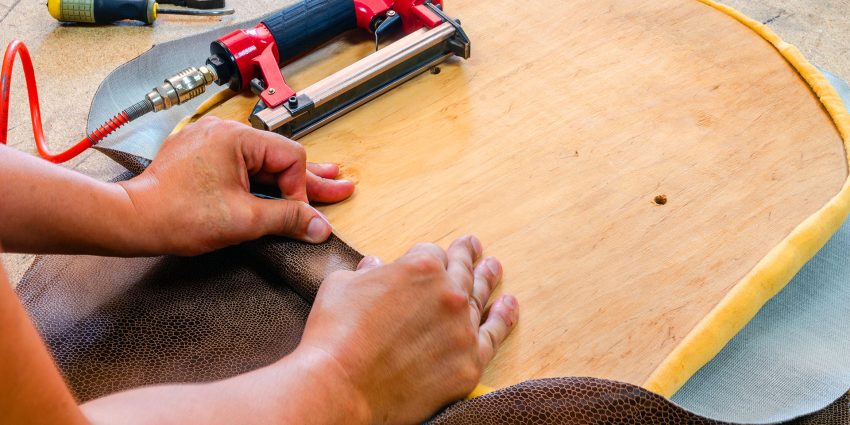
Average upholstery applies fabric and secures it. Exceptional upholstery manages tension as a continuous, deliberate process from the first pull to the last staple.
Fabric that goes on without careful tension control develops:
- Subtle ripples along flat planes that catch light unfavorably
- Stress lines radiating from corners where the material was pulled unevenly
- Edges that lift slightly over time because the initial pull didn’t account for material relaxation
Working from center to edge on every side, checking symmetry constantly, and understanding how the specific fabric type behaves under tension separates results that last from results that look fine at first and gradually deteriorate.
Corners Tell the Whole Story
Nothing reveals skill faster than a corner. It’s the one place where fabric has to negotiate a change of direction, often under competing tension from two adjacent sides. An average corner gets folded, tucked, and secured without much ceremony. It holds, usually. But it rarely looks clean.
An exceptional corner gets planned before the fabric is even cut. The upholsterer thinks through the fold sequence, considers how the material will stack at the point, and uses the right technique for the specific corner geometry. Knife-fold corners, pleated corners, and gathered corners each suit different situations. Applying the wrong method to the wrong corner is a choice that shows immediately.
A sharp, flat, intentional corner is a signature of someone who thinks before they pull.
The Finishing Details That Separate the Categories
Average upholstery considers the job done when the fabric is secured. Exceptional upholstery has a second phase: checking and refining every element that contributes to the finished impression.
This includes:
- Welting and piping that runs straight and true without puckering at curves
- Dust covers applied without visible sag or buckling
- Buttons that sit centered and at consistent depth when tufting is involved
- Bottom edges that align level with the frame all the way around
These details don’t require additional skill so much as additional attention. The difference is simply the willingness to look closely and correct what doesn’t meet the standard before calling a piece complete.
A Different Standard Entirely
The gap between average and exceptional upholstery isn’t talent. It’s a commitment to working through every layer, every tension point, and every finishing detail as if they all matter equally. Because in the finished piece, they do.