
Choosing the right dining room chairs upholstery material can completely transform the look, feel, and longevity of your dining space. Whether you’re reupholstering a set of vintage chairs or selecting fabric for a brand-new build, the material you choose impacts everything from comfort and durability to maintenance and style. With so many options flooding the market, knowing what to look for and what to avoid is the difference between a dining room you love for decades and one that shows wear within a year.
Why Dining Room Chair Upholstery Material Matters More Than You Think
Dining chairs take a beating. They’re sat in daily, exposed to food and drink spills, dragged across floors, and constantly subjected to friction. Unlike a decorative accent chair in a living room, a dining chair upholstery material must strike a careful balance between aesthetics and practicality.
The wrong choice can lead to fading, staining, fraying, or simply uncomfortable seating. The right choice, however, creates a dining room that is both beautiful and functional for years to come. Before diving into specific materials, it’s worth understanding the key qualities you should evaluate in any upholstery fabric.
- Durability (Rub Count / Wyzenbeek or Martindale rating), Dining chairs need a high rub count, typically 15,000+ for residential use.
- Stain Resistance: Food and drink spills are inevitable; stain-resistant finishes or naturally tight weaves help.
- Ease of Cleaning: Look for materials that can be spot-cleaned or wiped down easily.
- Comfort: Texture and breathability affect how enjoyable it is to sit for long meals.
- Style Compatibility: The material should complement your existing décor and color palette.
The Most Popular Dining Room Chair Upholstery Materials
There is no single “best” upholstery material for dining chairs, the right choice depends on your lifestyle, budget, and design preferences. Below is a detailed breakdown of the most widely used options, along with their pros, cons, and ideal use cases.
1. Leather
Leather is widely considered one of the most premium and durable options for dining chair upholstery. It’s easy to wipe clean, resists spills naturally, and develops a rich patina over time that actually improves its appearance.
Full-grain leather is the most durable variety, followed by top-grain leather, which is slightly more processed but still high-quality. Bonded or faux leather (PU leather) offers a budget-friendly alternative, though it tends to peel and crack over time, particularly in high-use environments like a busy dining room.
- Pros: Extremely durable, easy to clean, ages beautifully, sophisticated look
- Cons: Expensive (genuine leather), can feel sticky in warm weather, susceptible to scratches from pets
- Best for: Families with children, high-traffic dining rooms, classic or industrial décor styles
2. Velvet
Velvet has made a massive comeback in interior design, and for good reason. It adds an undeniable sense of luxury and depth to dining spaces, with its characteristic soft sheen and rich color payoff. Modern performance velvets are far more practical than traditional versions.
Cotton velvet, while beautiful, is more prone to crushing and staining. Polyester or acrylic velvet blends are engineered for durability and often come with stain-resistant treatments, making them a smart choice for dining chairs.
- Pros: Luxurious appearance, wide color range, comfortable to sit on
- Cons: Can attract pet hair and lint, traditional velvet may crush over time
- Best for: Formal dining rooms, jewel-tone décor, those who prioritize aesthetics alongside function
3. Microfiber / Microsuede
Microfiber is one of the most practical dining room chair upholstery materials available, particularly for families with young children or pets. It’s a tightly woven synthetic fabric that resists stains, repels liquids (when treated), and is remarkably easy to clean.
Microsuede, a subset of microfiber, mimics the soft texture of genuine suede without the high maintenance. It’s affordable, widely available, and highly durable with a rub count that often exceeds 30,000.
- Pros: Very stain-resistant, budget-friendly, durable, soft texture
- Cons: Can look less luxurious than natural fabrics, may attract pet hair
- Best for: Casual and transitional dining rooms, families with children or pets, budget-conscious renovators
4. Cotton and Cotton Blends
Cotton is a natural, breathable fabric that has long been a staple in upholstery. It’s comfortable to sit on for extended periods and comes in an enormous range of colors, patterns, and textures. Pure cotton, however, is not the most durable option for dining chairs in high-traffic homes.
Cotton blends, particularly cotton mixed with polyester or nylon, offer significantly improved durability and wrinkle resistance while maintaining the natural look and feel. Many designers recommend cotton canvas or cotton duck cloth for a casual, lived-in aesthetic.
- Pros: Breathable, natural feel, huge variety of patterns and textures, comfortable
- Cons: Prone to staining and fading in pure form, may wrinkle
- Best for: Low-traffic dining rooms, farmhouse or casual décor, those who prioritize comfort
5. Linen and Linen Blends
Linen is another natural fiber beloved for its elegant, textured appearance and cool, breathable quality. It’s a popular choice in Scandinavian, coastal, and minimalist interiors. However, pure linen wrinkles easily and is not naturally stain-resistant.
Linen blends, especially those incorporating polyester or synthetic fibers, address these shortcomings while preserving the sophisticated look of the natural material. Performance linen fabrics treated with stain-repellent finishes are now widely available and are excellent for dining chairs.
- Pros: Elegant, textured look; breathable; timeless aesthetic
- Cons: Wrinkles easily, absorbs stains quickly if untreated
- Best for: Neutral or minimalist dining rooms, occasional-use dining spaces, adults-only households
6. Polyester and Synthetic Blends
Polyester is the workhorse of the upholstery world. On its own, it can look and feel plasticky, but modern polyester weaves and blends are engineered to mimic the texture of natural fabrics with significantly improved performance characteristics.
Many upholstery fabrics marketed as “performance fabrics” are polyester-based. These engineered textiles are designed to handle stains, abrasion, UV exposure, and moisture, making them one of the most practical choices for dining chairs.
- Pros: Highly durable, easy to clean, affordable, wide range of styles
- Cons: Less breathable than natural fabrics, some lower-quality versions lack a premium feel
- Best for: Active households, outdoor dining areas (UV-stabilized versions), budget renovations
7. Wool and Wool Blends
Wool is an underrated upholstery fabric that offers impressive natural durability, excellent resilience, and a rich, textured appearance. It’s naturally flame-retardant, resistant to compression, and highly breathable, qualities that make it genuinely well-suited to dining chair upholstery.
Wool blends, combining wool with synthetic fibers, improve the fabric’s resistance to pilling and wear while keeping costs manageable. Bouclé fabric, which is typically a wool-based loop weave, is one of the trendiest upholstery choices in contemporary interiors right now.
- Pros: Naturally durable and resilient, comfortable, flame-resistant, sophisticated texture
- Cons: Can be expensive, may require professional cleaning, not ideal for households with wool allergies
- Best for: Formal dining rooms, mid-century or contemporary interiors, cooler climates
8. Vinyl (PVC)
Vinyl upholstery is the ultimate low-maintenance option. It’s waterproof, incredibly easy to wipe down, and highly resistant to stains, which is why it’s a staple in commercial dining environments like restaurants and cafés. For residential use, it offers a highly practical solution for families with young children.
Modern vinyl fabrics have evolved considerably, with embossed textures that convincingly mimic leather and other materials at a fraction of the cost. However, vinyl can crack in extreme temperatures and may feel less comfortable during prolonged sitting.
- Pros: Waterproof, extremely easy to clean, very affordable, durable
- Cons: Can crack over time, less breathable, may feel less luxurious
- Best for: Households with young children, kitchen-dining combos, budget-conscious projects
Understanding Fabric Durability Ratings
When shopping for dining room chairs upholstery material, you’ll often encounter durability ratings, specifically the Wyzenbeek (common in North America) and Martindale (common in Europe and the UK) test methods. Both measure a fabric’s resistance to abrasion.
- 15,000+ rubs: Suitable for light residential use
- 30,000+ rubs: General residential use
- 100,000+ rubs: Heavy residential / commercial use
- 10,000 rubs: Light domestic use
- 20,000–25,000 rubs: General residential use
- 40,000+ rubs: Heavy domestic / contract use
For dining chairs, aim for at least 30,000 Wyzenbeek rubs or 25,000 Martindale rubs to ensure the fabric holds up to regular use. High-traffic families may want to target commercial-grade fabrics for maximum longevity.
How to Choose the Right Upholstery Material for Your Dining Chairs
Selecting the ideal fabric is as much about your lifestyle as it is about aesthetics. Here’s a practical framework to guide your decision:
Consider Your Household
If you have young children or pets, prioritize stain resistance and ease of cleaning above all else. Vinyl, microfiber, performance polyester, and genuine leather are your best allies. If your dining room is more of an occasional formal space, you have more freedom to explore luxurious but delicate options like linen or velvet.
Think About Your Cleaning Routine
Be honest about how much maintenance you’re willing to do. Some fabrics require professional cleaning, while others can be wiped clean in seconds. Check the fabric’s cleaning code before purchasing:
- W: Water-based cleaners only
- S: Solvent (dry cleaning) only
- WS: Either water or solvent cleaner
- X: Vacuum only, no liquid cleaners
Match the Material to Your Décor Style
The material you choose should feel harmonious with your existing interior design language. Velvet and wool lend themselves beautifully to traditional, glam, or contemporary spaces. Linen and cotton suit farmhouse, coastal, and Scandinavian aesthetics. Leather and vinyl align naturally with industrial, mid-century modern, and minimalist interiors.
Set a Realistic Budget
Upholstery fabric pricing varies enormously. Vinyl and polyester blends are at the affordable end, while full-grain leather, high-end wool, and designer performance fabrics command a premium. Keep in mind that investing in higher-quality material often means a longer lifespan and lower total cost over time.
The Role of Professional Tools in Getting Upholstery Right
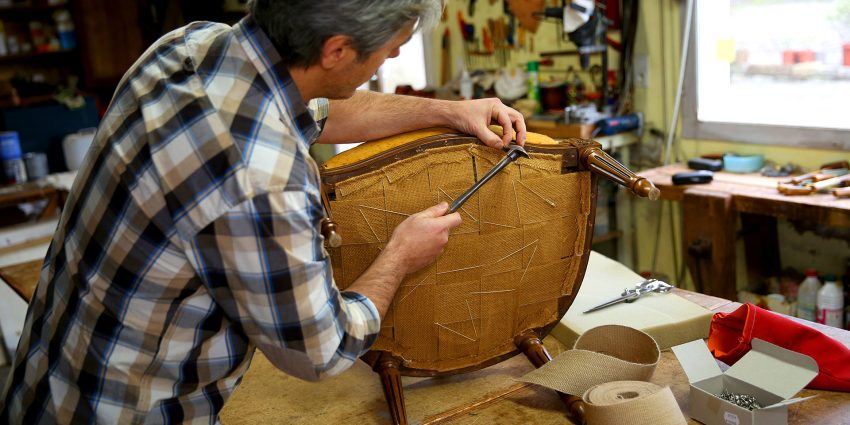
Even the best dining room chair upholstery material will fall short of its potential if it isn’t applied correctly. The application process, how the fabric is cut, pulled, and secured, has a direct impact on the final result. Interestingly, many DIY upholsterers attribute poor results to the fabric itself when the real culprit is technique or tools. If you’ve ever noticed that a fabric doesn’t sit or drape the way it should, this guide on how professional upholstery tools affect fabric behavior offers eye-opening insight into why tool quality is just as important as material selection.
Using the right tack hammer, upholstery staple gun, webbing stretcher, and fabric scissors ensures that even mid-range materials are applied with a professional-grade finish. Corners are crisp, tension is even, and the fabric sits without bunching or sagging. Whether you’re a DIY enthusiast or a professional upholsterer, investing in quality tools is non-negotiable.
Tips for Maintaining Dining Room Chair Upholstery
Once you’ve chosen and applied your preferred dining room chairs upholstery material, proper maintenance will significantly extend its lifespan. Here are key care practices regardless of the material you choose:
- Blot spills immediately: Never rub; blotting prevents the stain from spreading into the fiber weave.
- Vacuum regularly: Use a soft brush attachment to remove dust and crumbs before they work into the fabric.
- Rotate chair positions: Rotating chairs reduces uneven wear patterns across your dining set.
- Apply fabric protector: Stain-repellent sprays (like Scotchgard) add an extra layer of protection, especially on natural fabrics.
- Keep out of direct sunlight: UV exposure fades and degrades most upholstery materials over time; use window treatments to limit exposure.
- Follow the cleaning code: Always use the manufacturer-recommended cleaning method for your specific fabric.
Trending Dining Room Chair Upholstery Materials in 2024 and Beyond
Interior design trends are always evolving, and the world of dining chair upholstery is no exception. Here’s what designers and homeowners are gravitating toward right now:
Bouclé Fabric
Bouclé, a looped, textured fabric most commonly associated with wool, is dominating contemporary and minimalist interiors. Its nubby, tactile surface adds warmth and depth without overwhelming a space.
Performance Velvet
The combination of velvet’s luxurious appearance with performance-level durability has made engineered velvet one of the most sought-after materials for dining chairs in both residential and hospitality design.
Recycled and Sustainable Fabrics
Eco-conscious consumers are increasingly drawn to upholstery materials made from recycled PET bottles, organic cotton, or sustainably sourced wool. These options offer comparable performance to conventional fabrics with a significantly reduced environmental footprint.
Earthy Textured Weaves
Natural textures, linen-look weaves, jute blends, and textured cotton, in warm terracotta, warm white, and ochre tones are dominating the interior design landscape, particularly in organic modern and biophilic design schemes.
Final Thoughts on Dining Room Chairs Upholstery Material
Selecting the right dining room chairs upholstery material is a decision that touches on beauty, practicality, budget, and lifestyle in equal measure. From the timeless durability of genuine leather to the contemporary appeal of performance velvet and the eco-conscious choice of sustainable weaves, there is genuinely an ideal fabric for every home and every household. The key is to evaluate your priorities honestly, weigh your need for stain resistance against your desire for luxury, and match your material choice to both your aesthetic vision and your day-to-day reality.
Pair your chosen fabric with proper upholstery technique and quality tools, and your dining chairs will reward you with years, if not decades, of beautiful, comfortable use.