
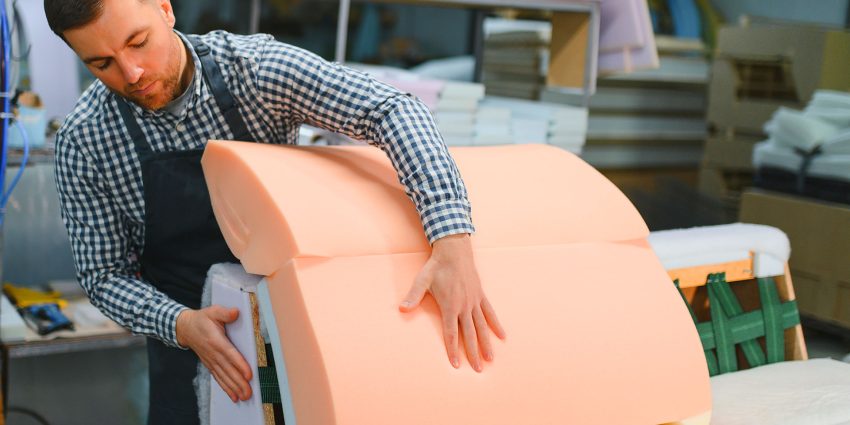
Upholstery looks like a big job from the outside: heavy fabric, tight corners, stubborn staples, bulky frames. But the truth is simpler: the biggest transformations come from the smallest changes. The tiny habits. The subtle adjustments. The things you refine quietly over time without announcing them to anyone.
If your upholstery work feels “almost there,” these four small changes can push it into a whole new category.
Let Your Fabric Dictate the Pace
Rushing fabric is the fastest way to ruin it. Upholstery isn’t a race, it’s a conversation between your hands and the material. Different fabrics respond differently to tension, folding, moisture, and even temperature.
Pause more. Observe more. Let the material tell you how it wants to move.
The best upholsterers don’t force fabric. They negotiate with it, gently, patiently, until the result looks effortless.
Upgrade Your Stapling Technique
Most people think stapling is the easiest part, just point, press, and move on. But improper stapling creates ripples, uneven tension, and loose holds that reveal themselves the moment the piece is finished.
A stronger stapling routine gives your entire project a cleaner backbone.
Focus on:
- Pulling fabric with consistent tension before each staple lands
- Stapling in sequences instead of straight lines
- Adjusting angles based on curves and corners
- Placing test staples before committing to a full line
- Listening for the sound of a staple seating correctly
A single staple might be small, but together they shape the entire surface.
Don’t Fight Your Corners? Shape Them
Corners tend to intimidate beginners because they feel unpredictable. One corner looks perfect; the next looks like a rushed gift wrap. But mastering corners isn’t about force, it’s about shaping.
The secret is understanding the personality of the corner. Square edges behave differently than rounded ones. Thick vinyl folds differently from thin linen. Foam density changes everything.
You’re not “wrapping” a corner. You’re sculpting it.
Slow down. Use smaller pulls. Let the fabric gather where it naturally wants to gather. Corners reward patience more than any other step.
Start Using the Right Tool for the Right Moment
Even one well-chosen tool can change how the entire project feels in your hands. Upholstery is physical, repetitive, and precise, so every small improvement in your tools improves your results.
Great tools give you:
- Cleaner staple removals that don’t tear the material
- Smoother transitions when regulating padding
- Straighter lines when trimming fabric under tension
- Less fatigue during long sessions
- More control when shaping curves and edges
You don’t need fifty tools. You just need the right ones at the right moments.
Conclusion
Transformation doesn’t come from dramatic overhauls. It comes from little decisions, how you pull fabric, how you place a staple, how you treat a corner, how you choose a tool. Over time, these habits stack on top of each other until your upholstery work looks cleaner, sharper, and more intentional.
Small changes. Long impact. That’s how real craftsmanship grows.